There’s a particular kind of building pressure that comes with schools. The spaces need to be flexible, sure, but they also need to be durable, low-fuss and easy to live with five days a week. And they need to look like they belong in the community around them, not like a “statement” that ages quickly.
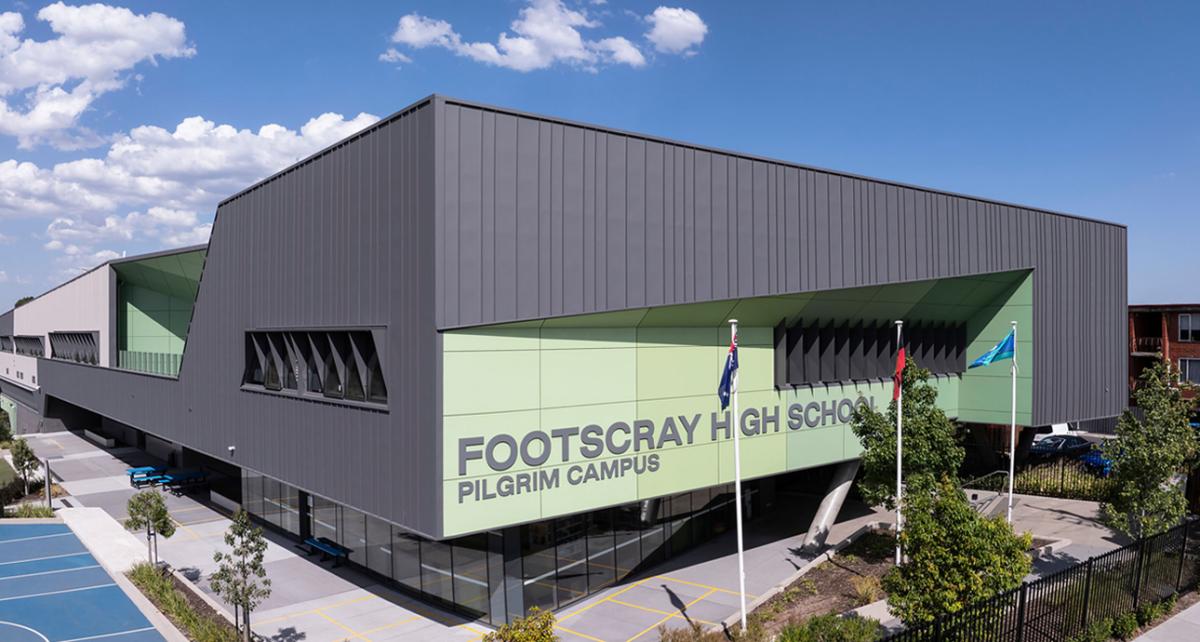
Footscray High School’s Pilgrim Campus is a good example of that balance. Located in Melbourne’s inner west, the campus serves students in Years 7 to 9 and forms part of the broader Footscray Learning Precinct.
The project was delivered for the Victorian School Building Authority following a $29 million investment announced in the 2018–19 Victorian State Budget, and opened in stages from 2021.
Designed by Hayball, built by Hutchinson Builders and installed by Faulkner Roofing, the campus is one of several education projects delivered as part of a wider precinct upgrade across Footscray.

What makes this campus feel different
Pilgrim Campus was designed around the day-to-day reality of how students learn. Not every task fits neatly into a standard classroom, and the building doesn’t pretend otherwise.
The campus features:
- A mix of open and more enclosed learning spaces
- Breakout areas where small groups can work without needing a dedicated room
- Tiered seating zones that can be used for presentations, briefings and shared learning
- Booth-style nooks that support quieter, independent work
- Outdoor courts and shared areas that get used throughout the day, not only at break times.
The exterior solution: Fielders Cadence™ walling
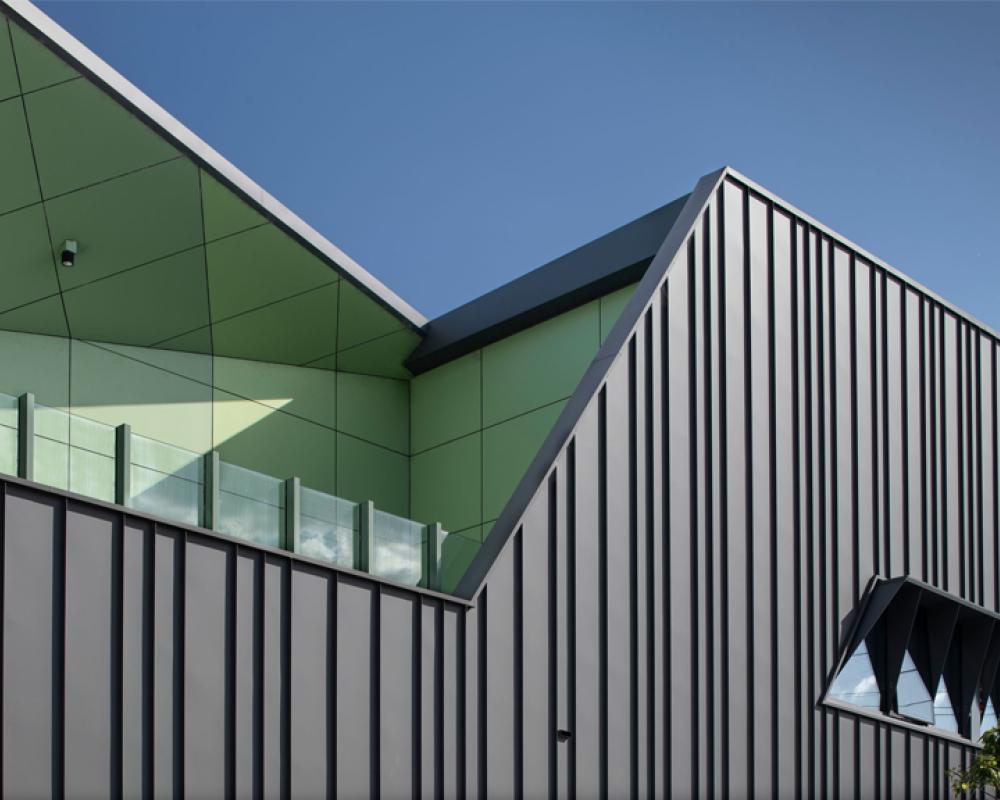
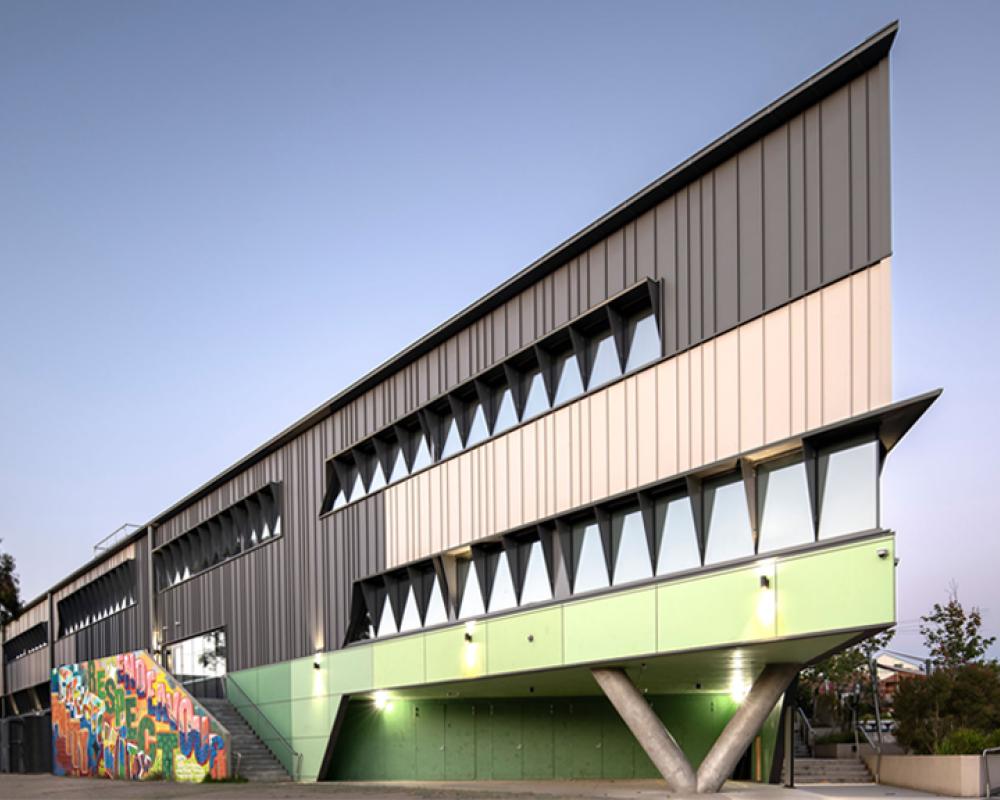
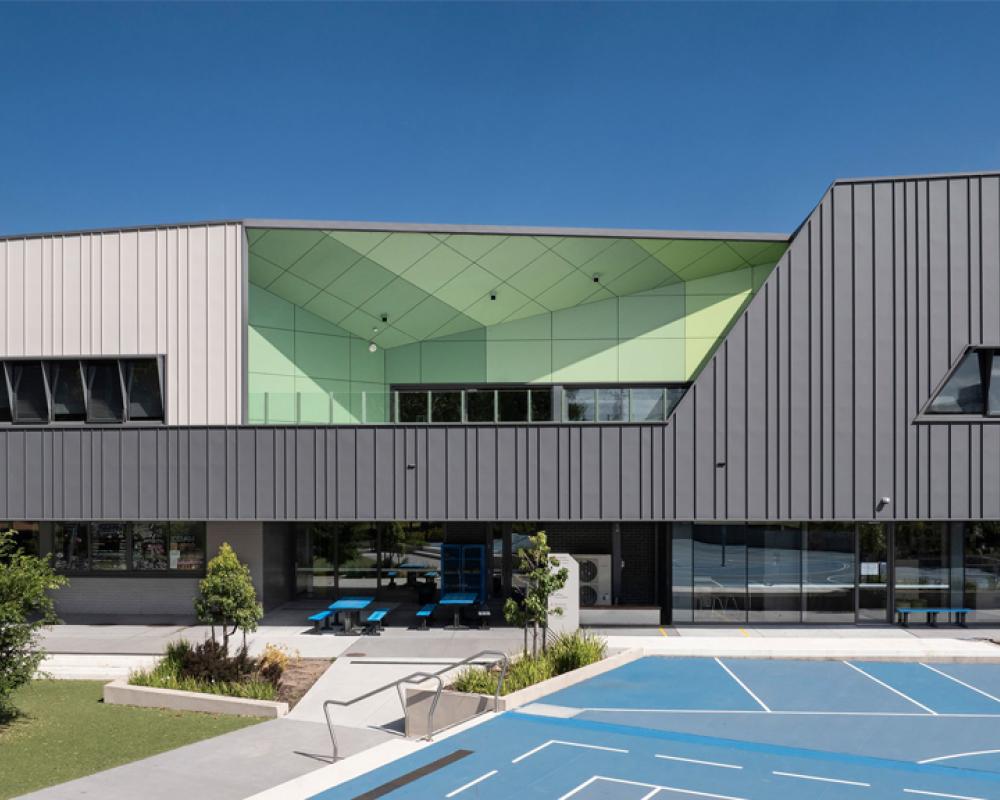
The external walls at Pilgrim Campus are finished in Fielders Cadence™ walling in COLORBOND® steel Matt Dune® and Matt Basalt®. It’s a simple palette, but it does a lot of work.
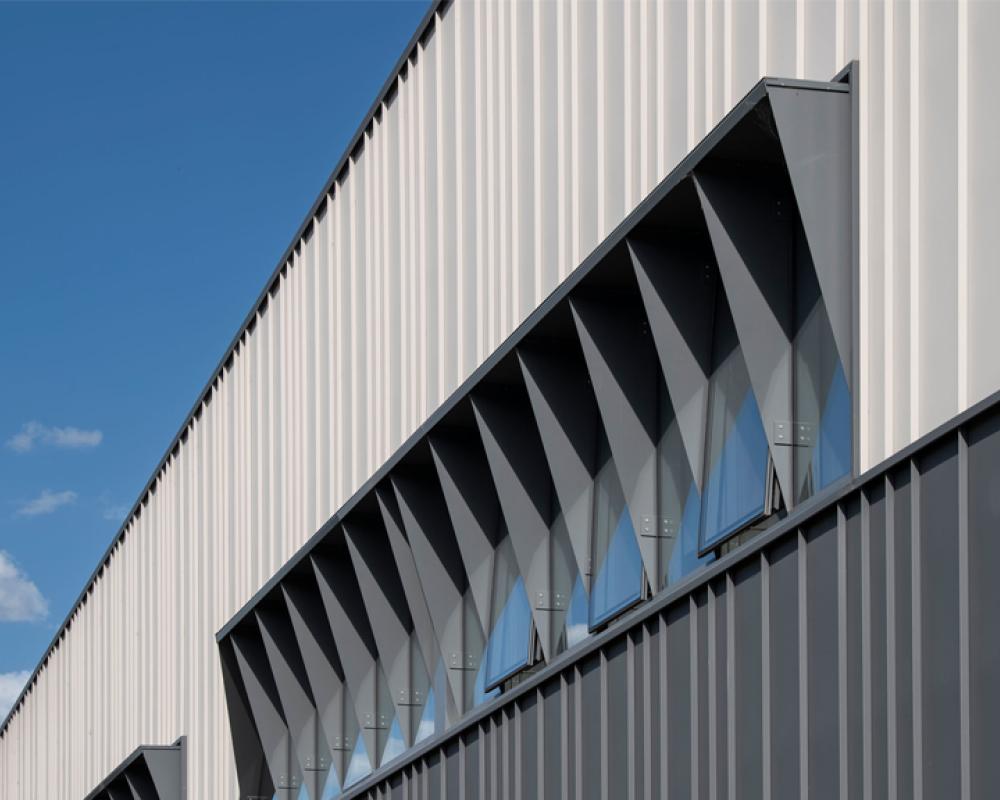
From the street, the building reads as calm and ordered. That’s partly the colour choice, and partly the profile. Cadence™ has generous flat pans and a strong, clean rib line, so you get definition without visual noise.
If you’re looking at it from an architect or specifier lens, key benefits include:
- A crisp, architectural rhythm across long facades
- A clip-fixed system that supports a neat, consistent finish
- A profile that suits walling applications where continuity matters
- A practical option for education settings, where materials need to hold up to daily use.
In other words, it helps the building look resolved, without relying on extra layers of visual treatment.
Why the Matt finish matters
In full sun, glossy surfaces can throw light around. On a school campus, that can make a big facade feel harsh and “busy”, even when the architecture is quite restrained.
The Matt finish softens that effect. It reduces glare, feels more muted at different times of day, and tends to sit comfortably alongside other materials and neighbouring buildings.
The Dune® and Basalt® pairing does something else too. It gives contrast without shouting. Dune brings warmth. Basalt anchors it. Together, they keep the campus feeling contemporary while still being grounded.
Performance that suits public buildings
Schools are long-life assets. They’re also high-use environments, and the external envelope needs to perform without demanding constant attention.
Cadence™ walling is manufactured from 100% Australian-made COLORBOND® steel, which makes sense for public projects where durability and consistency matter, and where maintenance planning is a real operational issue.
On projects like this, the practical questions tend to be:
- Will it handle Australian conditions year after year
- Will it keep its appearance without needing constant intervention
- Is it a system that can be installed cleanly and consistently
- Can the project team rely on local support and product knowledge when needed?
While not flashy requirements, they are the ones that shape whether a building stays looking good and working well.
A precinct approach
Pilgrim Campus sits within a broader redevelopment across Footscray. That precinct approach is important, because it changes how the campus relates to the community around it. It’s not an isolated site. It’s one part of a connected network of learning spaces.
When the Victorian Government spoke about the project, the emphasis was on giving students modern spaces that support collaboration and creativity. You can see that intent in the way the campus is planned, and you can also see it in the choices made on the exterior. The envelope doesn’t try to outshine the learning. It supports it.
What this project shows
Pilgrim Campus is a good reminder that “school design” isn’t just about interiors. The building envelope plays a role in how a campus feels, how it sits in its neighbourhood, and how it performs over time.
Here, Fielders Cadence™ walling in COLORBOND® steel Matt Dune® and Matt Basalt® helps deliver a finish that is clean, contemporary and suited to the day-to-day reality of an education environment.
Related Blog Articles
O Pavilion’s flawless FreeForm® finish
Brewed to perfection: Coopers’ bold new home, topped by Fielders