How to Choose the Right COLORBOND® Roof Colour
How to Choose the Right COLORBOND® Steel Roof Colour for Your Home
Roof colour often comes up later in a build or renovation. By that point, there’s already a long list of decisions behind you and it can feel like one more thing to push through.
But once it’s installed, your roof is always there. You see it from the street. You live under it every day. And it ends up influencing more than most people expect.
The colour you choose affects how your home handles heat, how it sits in its surroundings, and how finished it feels when everything else is done. With the range of COLORBOND® steel roof colours available today, it’s common to pause at the start - most people do.
Why roof colour ends up mattering
A roof takes up a lot of visual space. More than walls, more than windows. Its colour shapes the first impression of a home and keeps doing that long after the build wraps up.
It also plays a part in how the building responds to the climate. Lighter roofing colours tend to reflect more heat. Darker colours usually do the opposite.
Roof pitch, orientation, insulation, ventilation and nearby materials all influence how a roofing colour performs. A steel roof or wall doesn’t fade into the background. When the colour works, the house feels settled. When it doesn’t, something always feels slightly unfinished.
Step 1: Start with where you live
Climate is the most practical place to begin. It won’t make the decision for you, but it does narrow things down.
In warmer regions, lighter roofing colour options often make sense. They help limit heat absorption across the roof and can support internal comfort when paired with good design.
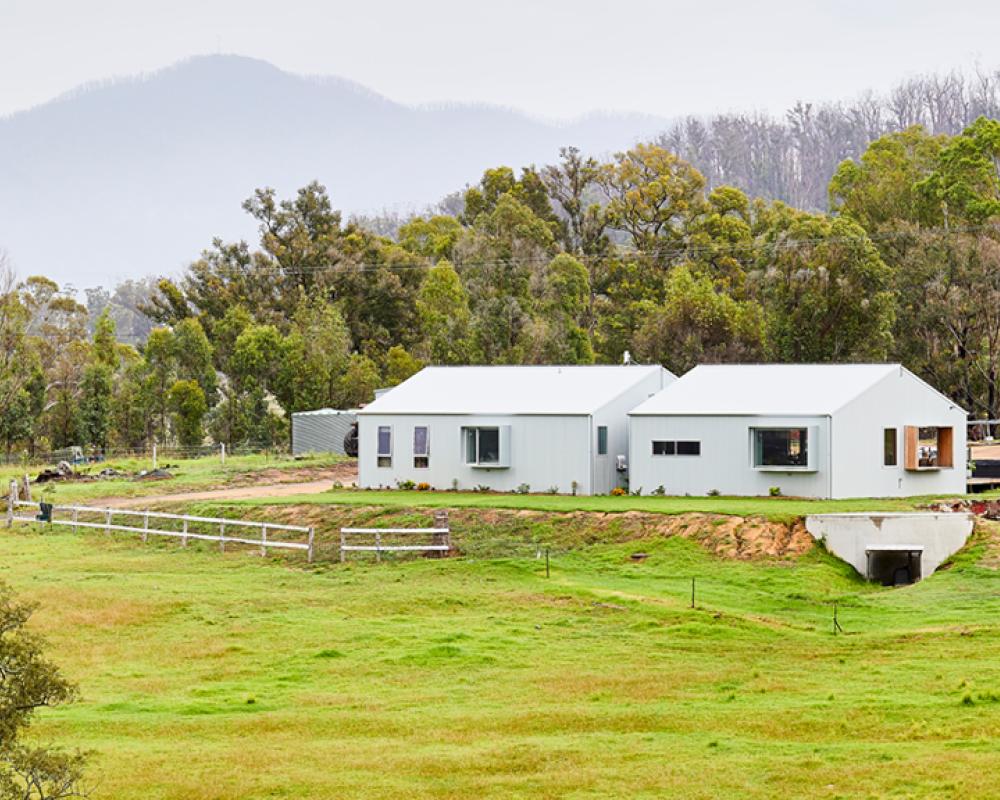
Surfmist® roofing is commonly used in hot and coastal locations. It suits bright light and open settings. Darker colours, such as Monument® roofing, absorb more heat. That doesn’t rule them out. They’re often chosen in cooler climates, or on homes where insulation, ventilation and orientation have been carefully considered.
If you’re unsure how this applies to your area, this is where a builder or designer can help to see what works locally.
Step 2: Look beyond your own block
Roof colour doesn’t exist in isolation. It’s always read against what’s around it, even when you don’t realise it at first.
In bushland or rural settings, softer and more muted tones tend to sit comfortably with the landscape. Coastal homes often lean towards lighter colour ranges that reflect their environment. In urban areas, stronger contrast can work well, particularly on simple forms or flat or sprung curved roofs.
Taking a wider view helps the roof feel connected to its setting. It doesn’t need to blend in completely. It just shouldn’t feel out of place.
Step 3: Match the colour to the house, not the trend
Roofing colour works best when it supports the home’s design rather than trying to lead it.
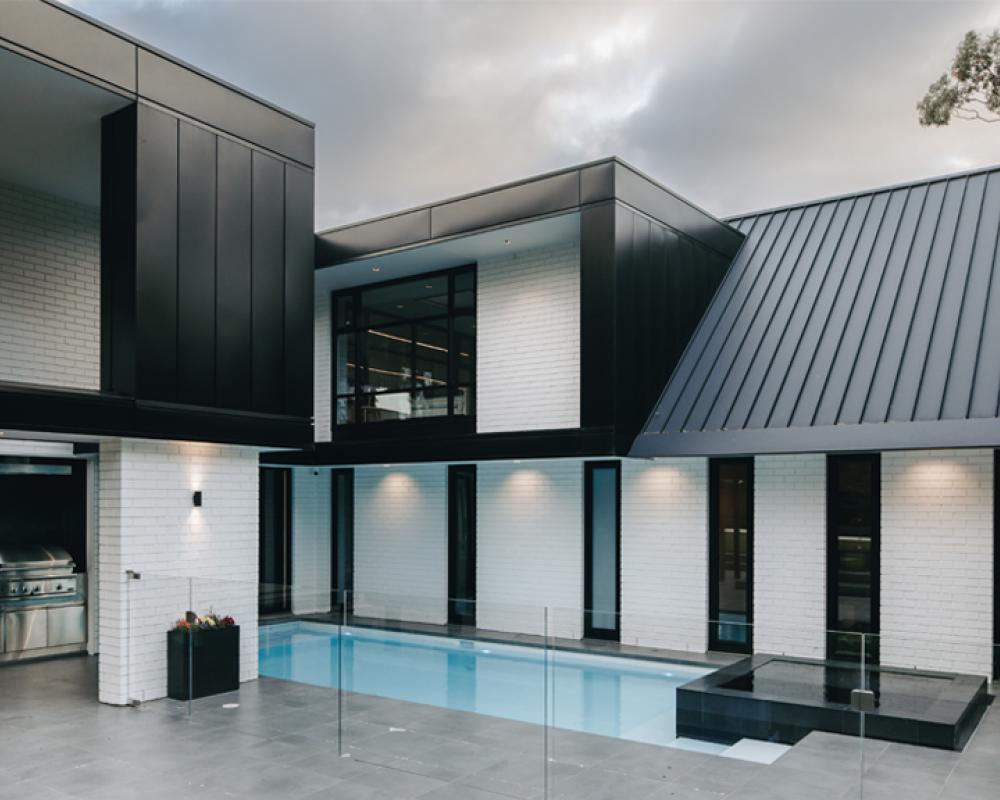
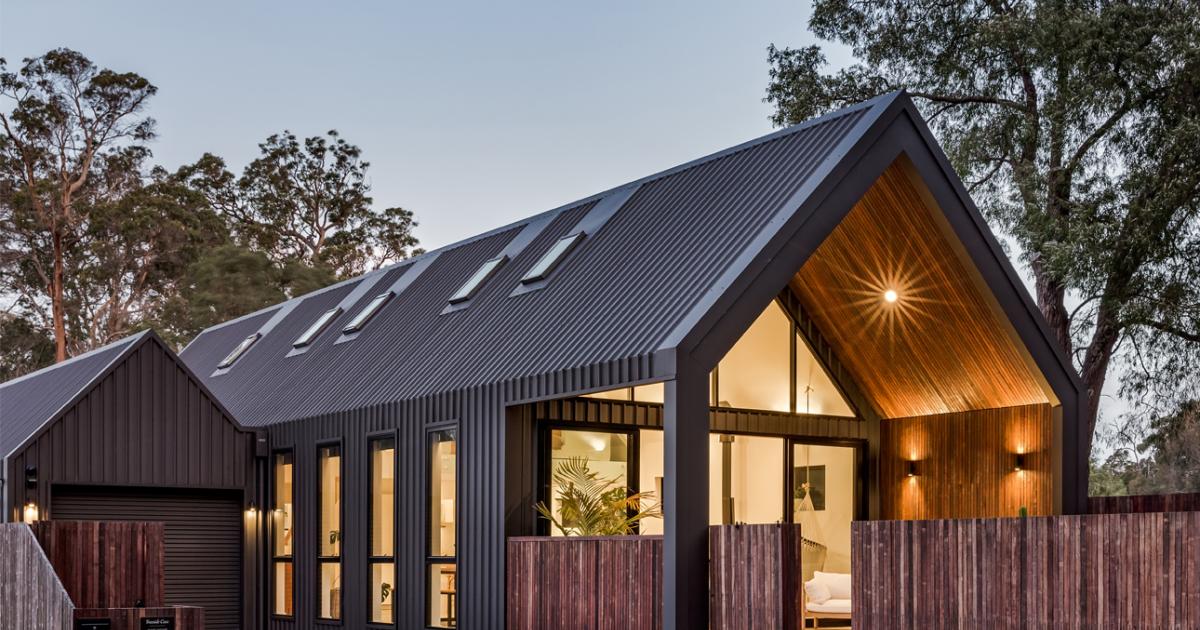
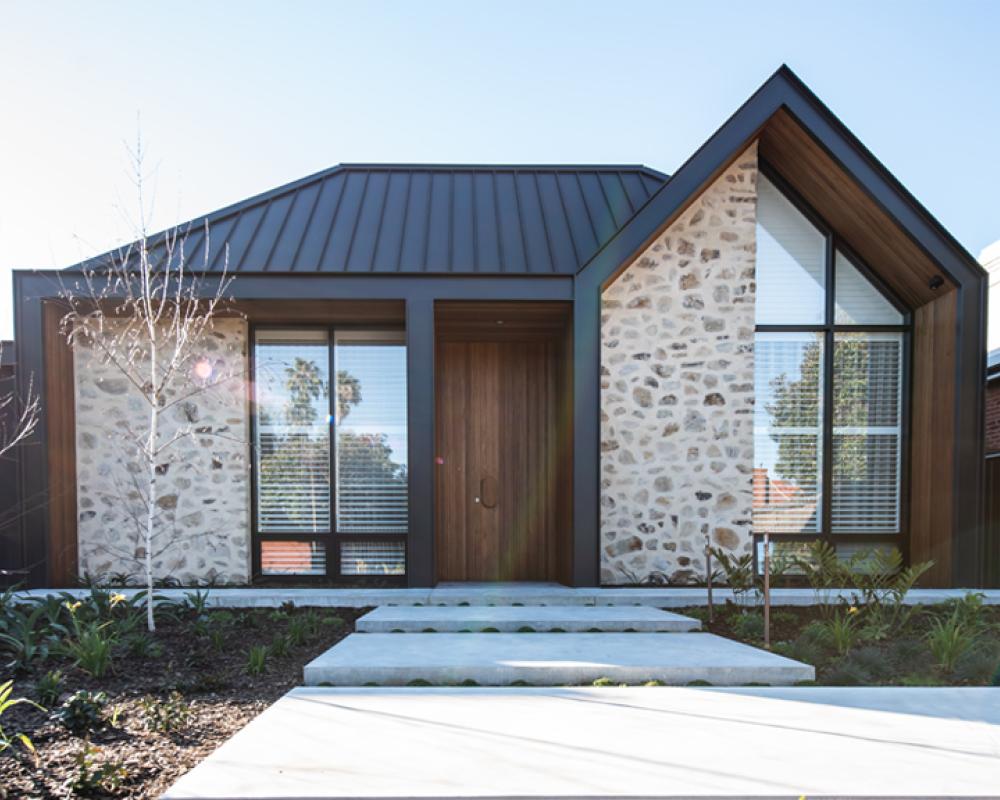
Contemporary houses with clean lines and low-pitch roofs often suit darker shades like Monument®, which emphasise shape and proportion. Traditional and coastal homes usually feel more at ease with lighter colours such as Surfmist®, allowing materials and detailing to carry more weight.
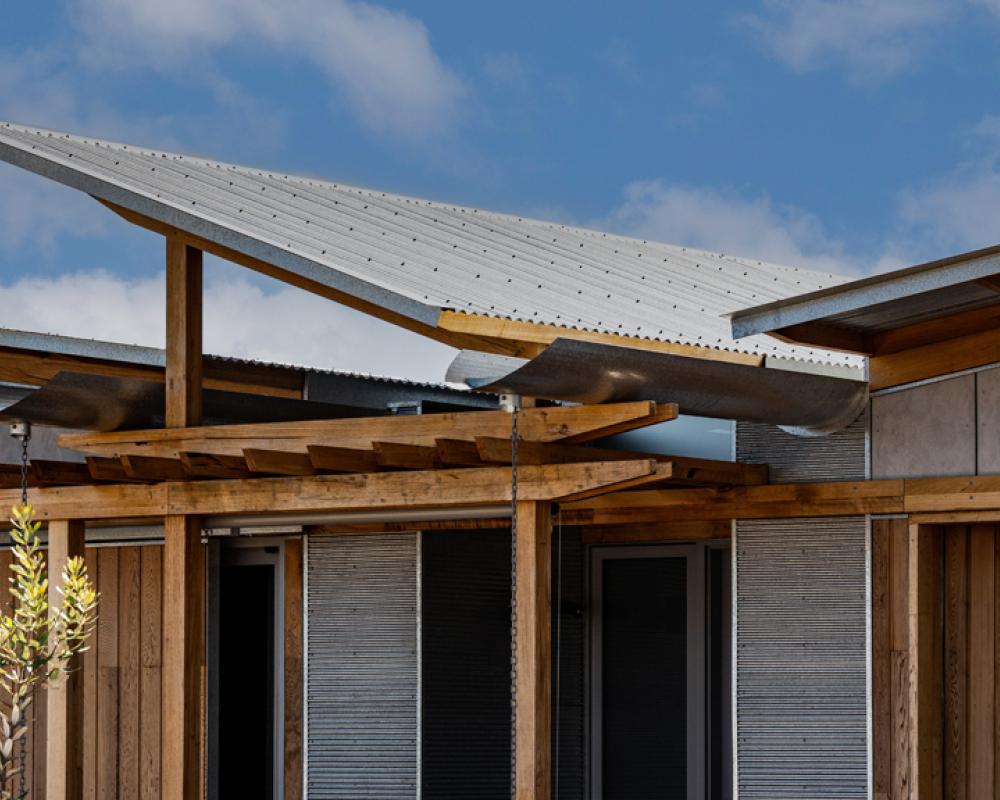
Profile matters too. A corrugated profile is equally at home with traditional and contemporary design, but colour changes how strong those curves appear. Flat or sprung curved profiles show light differently again, especially across wider spans.
Step 4: Don’t underestimate scale and finish
This is where people often change their mind. That’s normal.
Colour swatches are helpful, but they only tell part of the story. A colour that feels subtle on a small sample can appear much deeper once installed across a full steel roof or wall.
Finish plays a role as well. A matt finish reduces glare and often feels calmer across large roof or wall cladding areas.
If possible, look beyond the swatch. Colour charts, full sheets and installed examples give a clearer sense of how a colour actually behaves.
Step 5: See colours in real light
Before making a final choice, see shortlisted COLORBOND® steel colours outdoors.
Light changes everything. Morning light, midday sun and afternoon shade all pull different tones from the same COLORBOND® steel colour. This is especially noticeable on roof or wall cladding laid flat or sprung.
Seeing colours in real conditions often settles the decision. It’s less about finding the perfect shade and more about confirming the one that feels right over time.
What this means for your roof
Climate, surroundings and house design all add up. When they work together, the roof feels like it belongs. You stop noticing it, which is usually a good sign.
Fielders works with homeowners, builders and designers every day, supplying Fielders® roofing and walling made from COLORBOND® steel. Roof colour often starts out as one of the harder decisions.
With the right checks along the way, it usually ends up being one of the more satisfying.