The Australian facade in 2026 is shaped by Box Modern geometry, Japandi-influenced dark palettes, corrugated steel as a deliberate design choice, and an expanding appetite for curved forms. This piece connects those directions to the Fielders profiles behind each one, from Prominence® and Boulevard® through to S-Rib™ and Grandeur®, and introduces the Design Solutions Group for specifiers ready to move from inspiration to specification.
Australian facades are getting sharper, darker and more deliberate. And the thinking behind them is keeping pace.
At Futurebuild Australia 2026, the conversations at the Fielders stand kept circling the same themes. How facade specification is shifting. How colour choice is becoming a design decision first and a procurement decision second. And what a considered Australian exterior looks like right now.
There was more in those conversations than a single event could hold. This piece picks up the chat: the design directions shaping the Australian facade today, the steel profiles behind each one, and the support that helps bridge the space between concept and construction. Whether you were at ICC Sydney or you are finding this for the first time, there’s more to see.
Box Modern geometry and the flat-panel facade
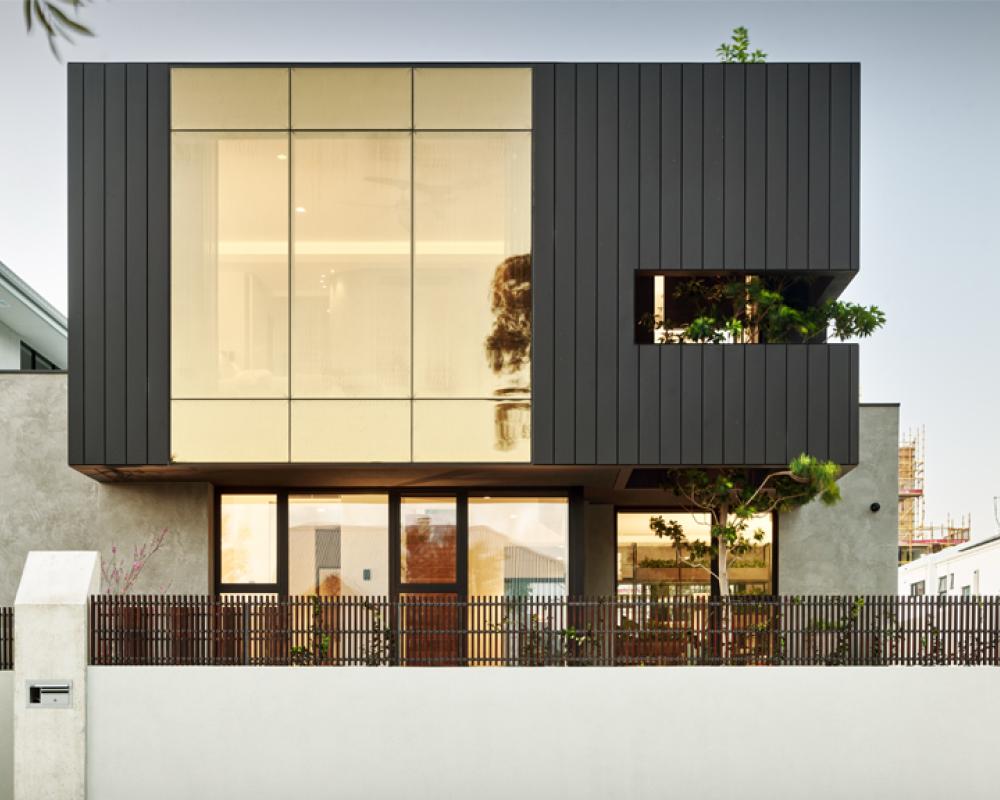
Box Modern has become a settled part of Australian residential and light commercial architecture. Clean volumes. Flat planes. Recessed joints. This type of design rewards materials that hold a line, and steel does that extremely well.
The Fielders profiles working hard in this space are worth a closer look. Prominence is wide, flat-pan walling with concealed fixings and a refined finish. Available in multiple pan widths and suited to vertical or horizontal installation, it's tested for both cyclonic and non-cyclonic regions. It's a profile that specifiers and builders keep reaching for because it delivers a clean result without complicating the install.
Boulevard takes a slightly different path to the same outcome. Its European-engineered interlocking panels create a clean recessed joint look across vertical or horizontal runs. It is the most versatile profile in the Finesse range, and it is being specified on everything from high-end residential facades to commercial builds where the architect wants sharp lines and long-term durability.
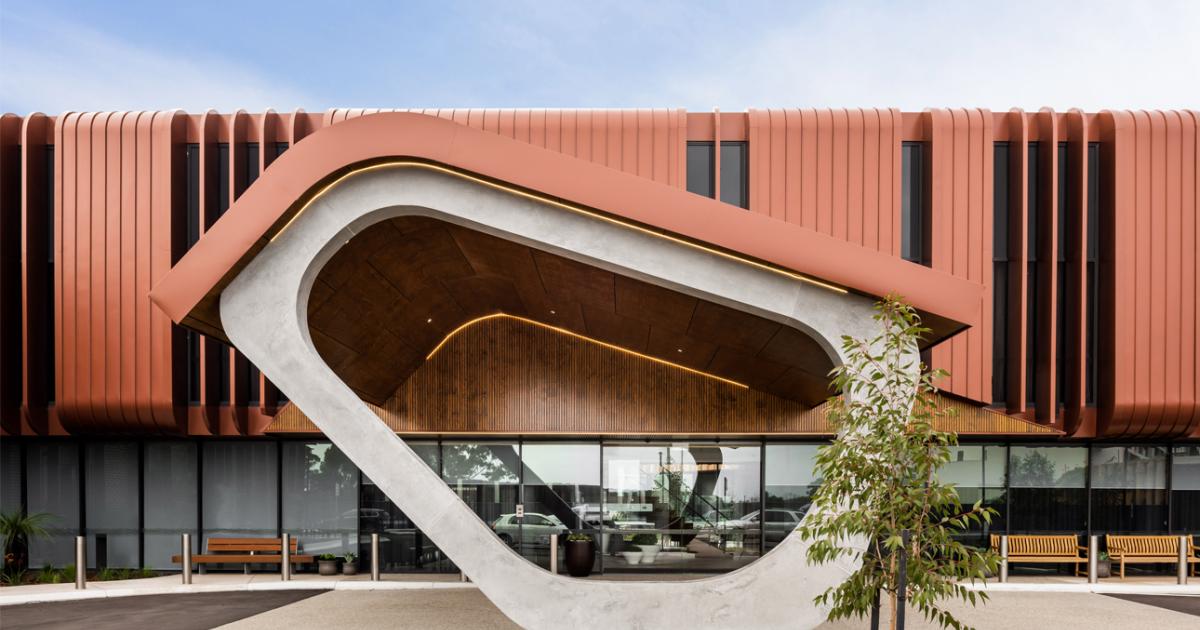
The Newman Health Service Facility in Western Australia is a good example of what happens when these solutions work together. Silver Thomas Hanley Architecture specified Prominence and Boulevard in standard and custom pan depths, set in a recurring vertical pattern with every third line standing proud. A 15-month installation that demanded precision. The result is an angular, textured facade that looks as deliberate as the brief behind it.
Japandi restraint and dark, matt palettes
There's a quieter shift happening alongside the Box Modern movement. Japandi-influenced design is bringing restraint to the Australian facade: deliberate simplicity, natural-material pairings and palettes that sit back rather than push forward.
You can see it in colour specification. Mid-tone greys are giving way to warmer darks and earthy neutrals. Basalt has become one of the most frequently specified colours in the COLORBOND steel range for facade work. It reads differently depending on light and orientation, which gives it a depth that mid-tones don't offer.
The COLORBOND steel Matt finish range is a big part of this. Matt surfaces reduce glare, soften the way light interacts with the facade and carry a tactile quality that works well alongside timber, concrete and stone. For projects with mixed-material exteriors, matt steel becomes the visual anchor without competing with what's around it.
This trend runs across the Fielders facade range. Colour and finish choice is central to every specification.
Texture and the staying power of corrugated steel
Flat and minimal is only part of the picture. There is also a strong move toward deliberate texture and honest material expression, and corrugated steel sits right in the middle of that shift.
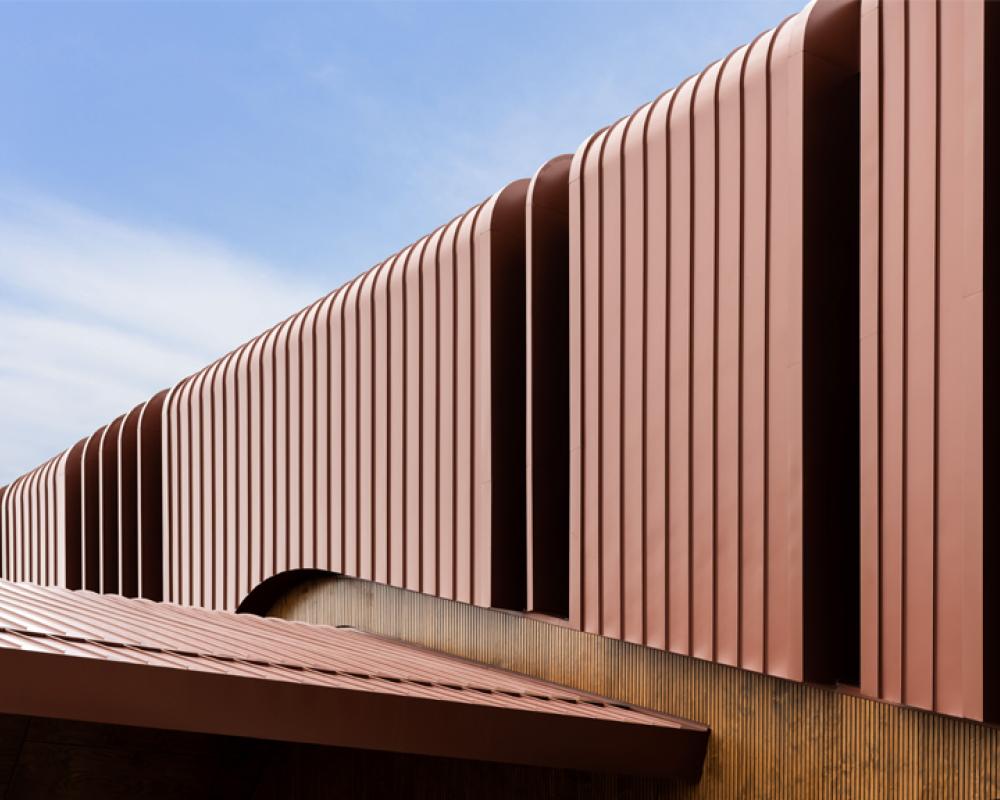
S-Rib™ is the corrugated profile that works on heritage restorations and contemporary facades. It can be installed vertically, horizontally or curved, and it is available in multiple BMT options with the ability to be curved down to a 450 millimetre radius. It is one of the most flexible profiles in the range.
The Modbury Sports Club in South Australia shows what happens when corrugated steel meets a modern civic brief. Walter Brooke specified Boulevard for its bold linear expression and clean architectural lines. Wide flat pans and expressed ribs introduce shadow definition and depth across the facade, and the COLORBOND steel external skin keeps maintenance low for a building that sees high traffic every day.
For architects, the appeal is material honesty. Corrugated steel is not trying to be something else. When it is specified on a contemporary project, it connects the building to a material tradition that runs through Australian architecture while still feeling current.

Curved geometry and the expanding design envelope
Not every project calls for a flat plane. Curved steel facades are appearing more often on commercial and civic work, and the profiles are keeping pace.
Grandeur is standing seam cladding with a curving capacity that most profiles cannot match. It smooth curves to a 1.5 metre radius in steel, with sheet lengths up to 24 metres. For projects where geometry is part of the brief, it opens up forms that would otherwise need more complex or costly materials.
Curved steel facades are the newest part of the conversation and they’re gaining traction. The interest shows where design is heading, and the capability is ready for architects who want to explore it.
The support behind the facade
Every profile featured in this piece has been developed and tested in a NATA-accredited facility before reaching a project site. Wind, water, structural load and fire performance are all assessed against Australian Standards, with published data available before specification is locked in.
Fielders’ Design Solutions Group works with architects and specifiers from concept through construction. Whether it is a detailing question, a performance query for a specific site or early thinking about which profile suits the design, the team is there as a working partner through the specification process.
If you visited the Fielders stand at Futurebuild Australia, the Design Solutions Group is the team to continue the conversation with. And if you're picking up the thread here, the same support is available. There's more to see, and more to work with.
Continue the conversation
The Australian facade is changing. The profiles, the palettes and the thinking behind them are all moving, and steel sits at the centre of that shift.
Take a look through the Fielders facade range online to explore the full suite of solutions, finishes and application guidance for your next project.
Or get in touch with the Design Solutions Group to talk through your next facade project.

The COLORBOND® steel Matt finish range includes Basalt® Matt, Monument® Matt, Dune® Matt, Shale Grey™ Matt, Surfmist® Matt and Bluegum® Matt. All are available across the Fielders facade range. Matt finishes soften the way light interacts with the surface and carry a tactile quality that pairs well with timber, concrete and stone on mixed-material facades.
Early. The Design Solutions Group works with architects and specifiers from concept through construction, so the most value comes during specification and detailing when profile selection, substructure and junction decisions are still open. But the team also supports projects already in progress where a technical question comes up on site or during procurement.
Both are flat-pan walling profiles with concealed fixings, but they suit different design outcomes. Prominence® offers wide, flat pans and is tested for both cyclonic and non-cyclonic regions, making it a practical choice across a range of Australian conditions. Boulevard® has European-engineered interlocking panels that create a recessed-joint look, and is the most versatile profile in the Finesse® range. On projects like the Newman Health Service Facility, both were specified together to create depth and variation across a single elevation.
Yes. Grandeur® is a standing-seam profile that smooth-curves to a 1.5 metre radius in steel, with sliding clips that allow sheet lengths up to 24 metres. S-Rib™ can also be spring-curved down to a 450 millimetre radius. For projects where the facade involves curved or contoured geometry, these profiles provide options that would otherwise require more complex or costly materials.
COLORBOND® steel is engineered for Australian conditions, including coastal and industrial exposure. Standard COLORBOND® steel suits most residential and commercial projects. For sites closer to the coast or in more demanding environments, COLORBOND® Ultra steel provides additional corrosion resistance. Fielders and the Design Solutions Group can help determine the appropriate grade based on site-specific factors like distance from breaking surf and prevailing conditions.